
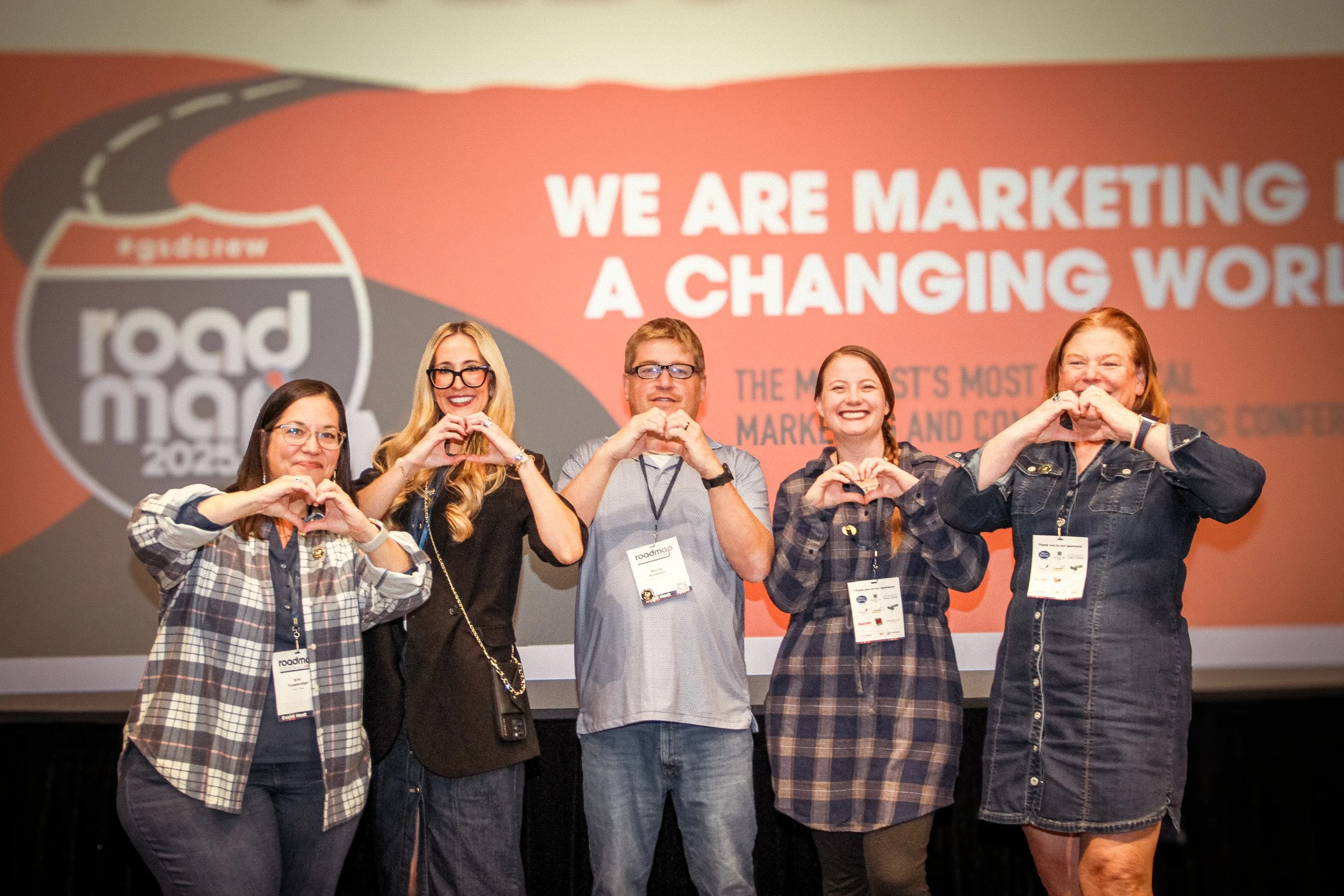
Our mission is to elevate the practice and profession of marketing.

With great responsibility…
For generations, companies have convinced (dare I say, manipulated) consumers into believing things that aren’t true, buying products that don’t do what they promise, or supporting ideas that are built on untruths. As professionals who advise companies and organizations on their messaging, analyze the behaviors of their customers, and guide interactions with consumers through their brands, it’s incumbent on us to act with the highest integrity and an eye on the larger impact of messages that reach millions of people instantly.
This is not a responsibility we take lightly.

In practice…
…through our consulting operations, we are advocating for and implementing better marketing tactics and strategies; those that respect the customer (respecting their privacy and not recommending tactics to our clients that take advantage of that; respecting their perspectives and not manipulating them into thinking they're wrong or bad because of it), are ethical and honest, inspire change rather than create artificial demand, appeal to humans' better nature, and drive action through motivation instead of manipulate through fear and shame.
In our profession…
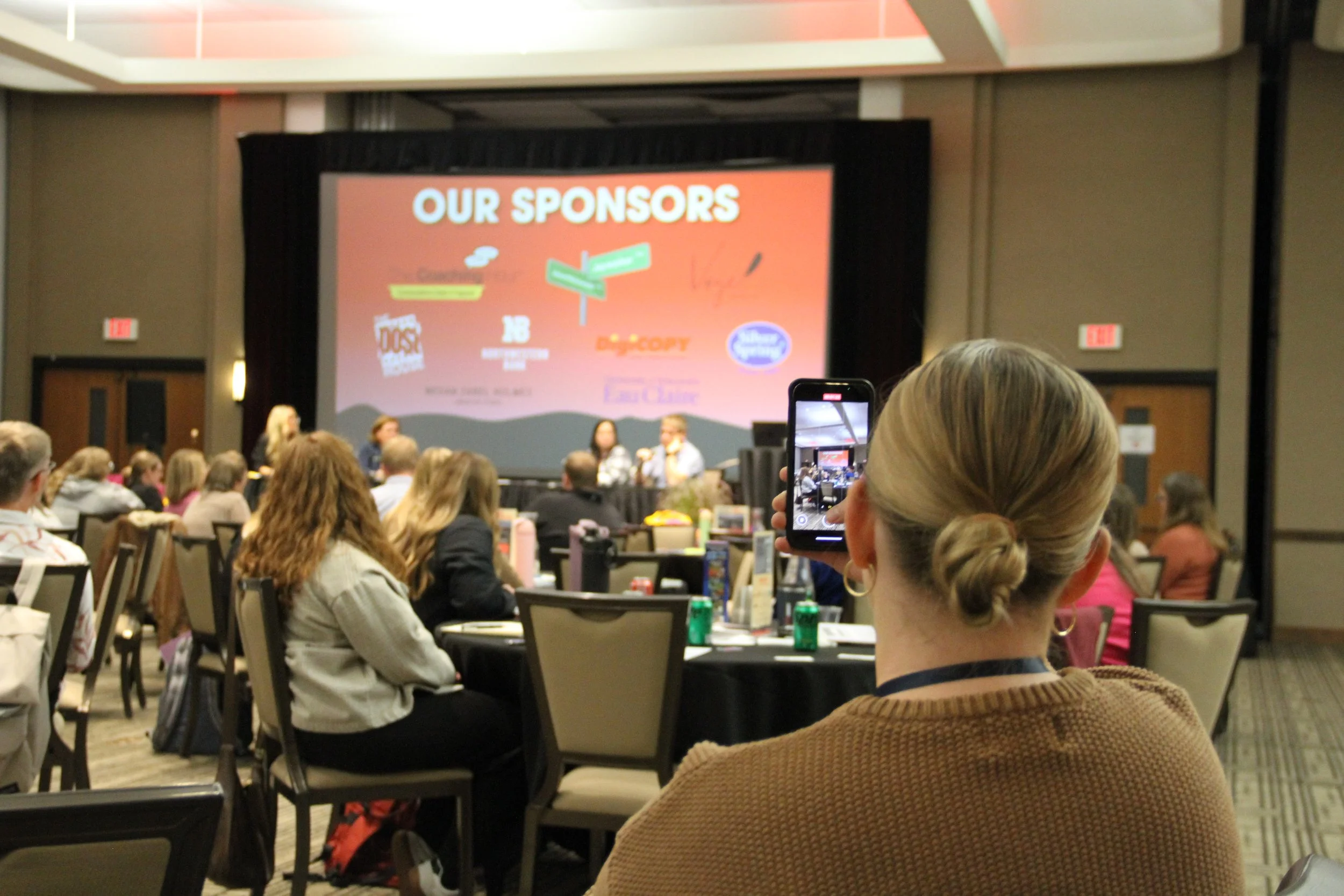
…through our content and event operations, we provide professional education, recognition, networking, working groups, and mentorship to elevate the marketing profession to become the most respected function in business.

In our operations…
…it’s no surprise that AI is changing our field and how we do our work. While it offers us some efficiencies and the ability to find information, analyze data, or identify patterns faster, we are finding that it cannot replace the work that we do as marketers, though it will shift the time we spend doing various tasks.
While it may speed up research, without a trained eye it can lead to inaccurate analysis.
While it may write copy, without a human editing it can come across as inauthentic.
While it may analyze data, without an experienced interpreter, it may lead to biased conclusions.
We are actively testing and exploring the cost/benefit of using new AI tools, and we weigh our decisions with the ethical considerations of using them. We are deeply concerned about the detrimental environmental impact that the technology is having, as well as what relying on AI in various aspects of society means for the next generation; how it will impact relationships and communication, what it will mean for artists and those who create, or how it will one day optimize for something we never intended and will no longer be able to control.
The bottom line: We have a responsibility to be good stewards of the trust our clients and communities have placed in us. We employ limited, narrow uses of AI as marketing consultants, and will stay informed as the technology evolves, making thoughtful decisions that align with our values. And we will always place respect for our humanity and our communities first.
What do we need to do?
We Need to Elevate the Profession to the Strategy Table:
In many small to midsize companies, marketing is an afterthought (what is traditionally known as marketing, anyway) and it's viewed more as "making things pretty" or merely advertising (if there's budget for it) instead of the role of providing insight to determine product, market, customer, pricing, distribution, or strategic partnership decisions. Marketing pros are commonly seen as the back-office do-ers for the sales team, and are often marginalized on the leadership team, if they are even included at all. This has been my experience in multiple small to mid-size organizations. (Funny story: I once had the CEO of the company snicker when I suggested that my career path could lead to CMO. He told me there was no such thing. I'm not bitter, just more motivated now, but my guess is he's not the only one with that perspective.)
We Need to Elevate the Profession for the Next Generation of Marketers:
Students are coming out of undergrad or technical school with a strong foundation or speciality marketing skills, but when they arrive in their first job in marketing, they're often disappointed or overwhelmed. There often isn't a strong marketing leader for them to learn from. They’re expected to be good at every aspect of marketing. There isn't support for marketing best practices internally (just a culture of "get more sales"). There isn't a community around them to "talk shop" so they can overcome these challenges. In our small community of Eau Claire, we have started to build a community where marketers can learn, connect, be recognized, and share knowledge with one another. In addition, our future goal is to establish a mentor program for entry-level marketing professionals to make sure the next generation of marketers has the confidence, knowledge, support, and realistic expectations to continue to elevate our practice and profession as it evolves.
We Need to Elevate Marketing Practice in Small Businesses:
Many marketing agencies that provide best-practice execution serve companies that have healthy budgets; they simply don't work with smaller companies that can't spend $20k/mo on digital ads, or $50k on a website. Most of our clients don't have this budget, but they're either earlier in their growth, or don't intend to be this large. If they were talked into these services, many times they leave with little to show for it and have lost their trust in marketing agencies altogether. So they're left with DIY tools, generic content they find online to learn from, piecemeal solutions they're not confident in, and they hire less experienced marketers who have to wing it because they haven't been taught how to do marketing well within resource limitations of small businesses. For those companies, they need more accessible options to execute marketing. Much of the content that professes 'how to do it well' only works if the company has the resources, or if they're ok forgoing respect for their consumer. Spam, impersonal LinkedIn connections, irrelevant ads, overuse/misuse of AI, and useless social media content doesn’t work for so many small businesses. We need to fix this.
We Need to Elevate the Customer:
Respect for the customer has been lost in the last few decades. Maybe it's never really been a priority, I don't know. But now that the consumer has so much more choice and control in their buying decisions, marketing needs to change. We've been wearing ourselves out trying to fit a square peg in a round hole and it's a disaster. Most of the thought-leadership on how to fix the problem is again geared toward large companies with big budgets. For example, content marketing–I fully believe in this as a long-term marketing approach, but this is really tough for smaller companies because it requires a larger long-term investment. How can we make it more accessible? Privacy laws continue to evolve, and yet small businesses are unaware or don't care because the laws don't apply to them. So they mostly dismiss the need for consumer data privacy. Yikes.
That’s probably not all.
If you’ve made it this far, you’ve probably been nodding along because you feel this as a consumer, too. We don’t have all the answers, and certainly don’t have enough resources right now to start moving bigger chess pieces. But in our corner of the world, working with companies who align with our values, we will start the ball in motion toward better.
We hope you’ll come along with us.

Want to Join in this Mission?
We want to engage leaders across disciplines and business functions to make change. Reach out if you’re interested in chatting about ideas, to make connections, or to offer support.